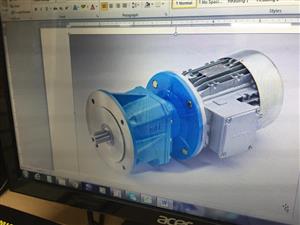
Helical gear motors combine an electric motor with a helical gearbox, where gears have angled (helical) teeth instead of straight teeth. This design provides smooth, quiet operation, high efficiency, and high load-carrying capacity, making helical gear motors one of the most widely used types in industrial applications.
Key features
- Helical gears with angled teeth for smooth power transmission
- High efficiency (typically 94–98%, depending on the number of gear stages)
- Low noise and vibration
- High torque output
- Compact and durable construction
- Suitable for continuous-duty operation
Typical specifications
- Power: 0.12 kW to 200 kW or higher
- Output speed: Approximately 0.1–500 RPM (depending on the gear ratio)
- Gear ratios: About 3:1 to over 10,000:1 (with multi-stage gearboxes)
- Output torque: From a few newton-metres (Nm) to over 50,000 Nm
Advantages
- High efficiency compared to worm gear motors
- Smooth and quiet performance
- High torque capacity
- Long service life
- Reliable under heavy loads
- Lower energy consumption
Common mounting options
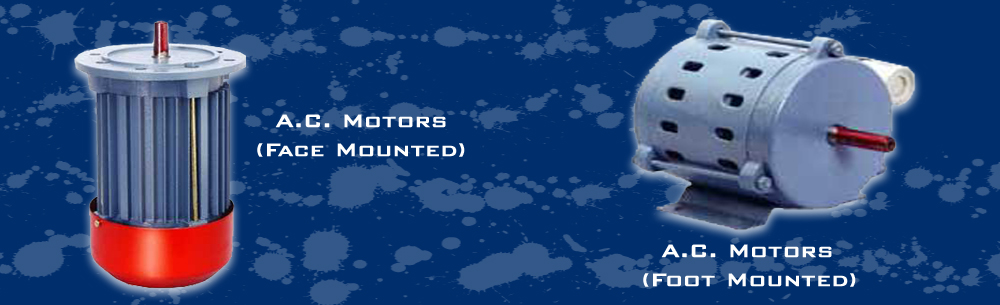
- Foot-mounted
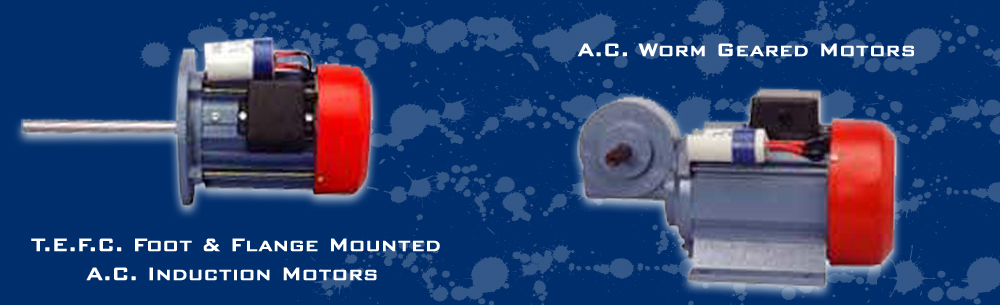
- Flange-mounted
- Foot and flange combination
- Hollow shaft
- Solid shaft
Common applications
- Conveyor systems
- Material handling equipment
- Mixers and agitators
- Packaging machinery
- Food and beverage processing
- Cement and steel plants
- Textile machinery
- Cranes and hoists
- Industrial automation
- Mining equipment
Types of helical gear motors
- Inline helical gear motors – Input and output shafts are in line; ideal for general-purpose industrial drives.
- Helical-bevel gear motors – Combine helical and bevel gears for high efficiency and right-angle power transmission.
- Parallel shaft helical gear motors – Feature parallel input and output shafts, making them suitable where installation space is limited.
- Helical-worm gear motors – Combine helical and worm gearing to achieve higher reduction ratios with smoother operation.
Selection considerations
When selecting a helical gear motor, consider:
- Required output torque (Nm)
- Output speed (RPM)
- Motor power (kW or HP)
- Gear ratio
- Mounting configuration
- Input voltage and frequency
- Duty cycle and operating environment
- IP protection rating and insulation class